How to Build a Wedding Day Timeline That Actually Protects Your Experience
A guide for couples who want to be present for every moment — not managed through them
Last spring I photographed a wedding at a summer camp outside Portland.
The day was running behind. Not dramatically, not catastrophically — just the gentle, inevitable way that wedding days do when you fill them with people who love each other and have things to say.
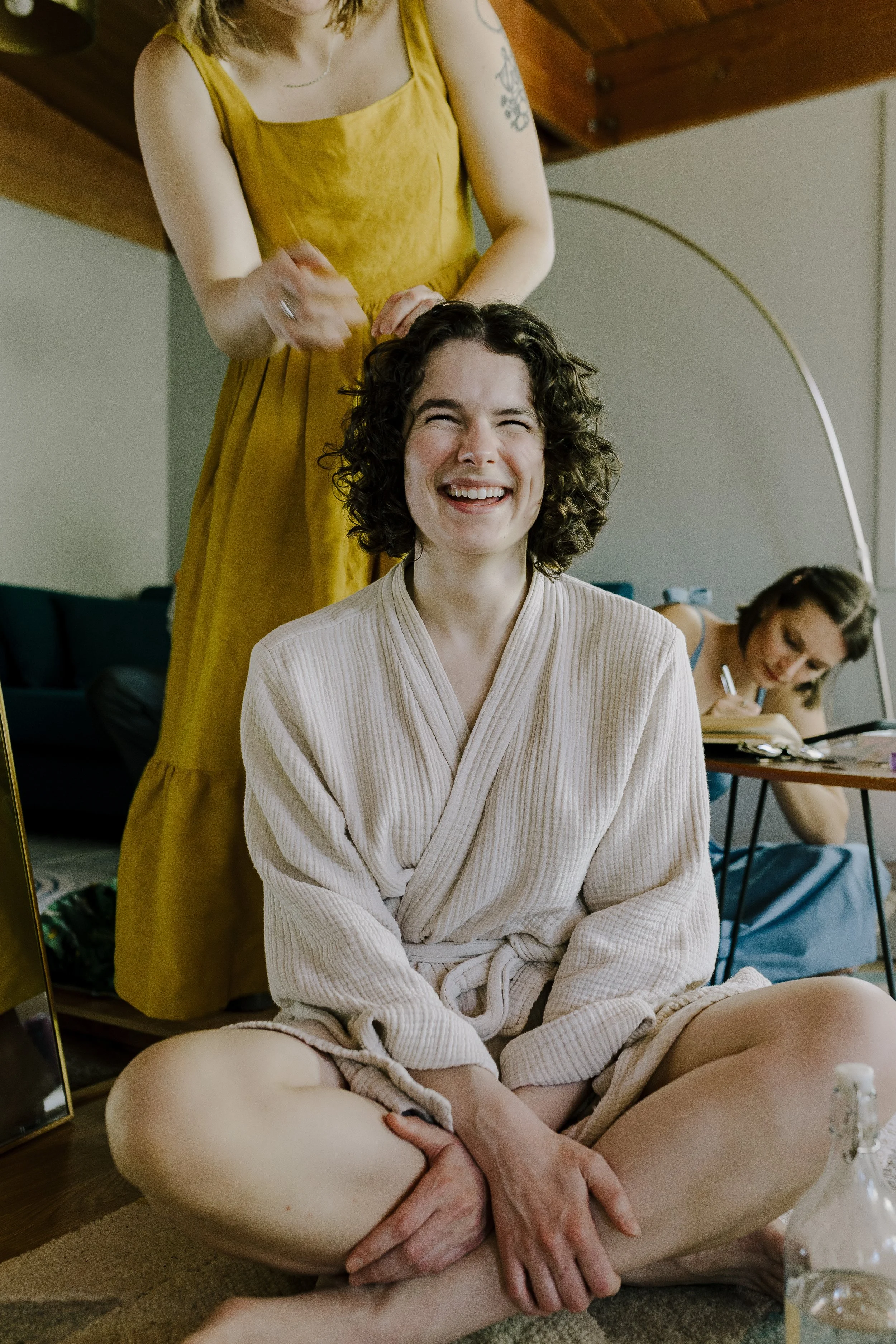
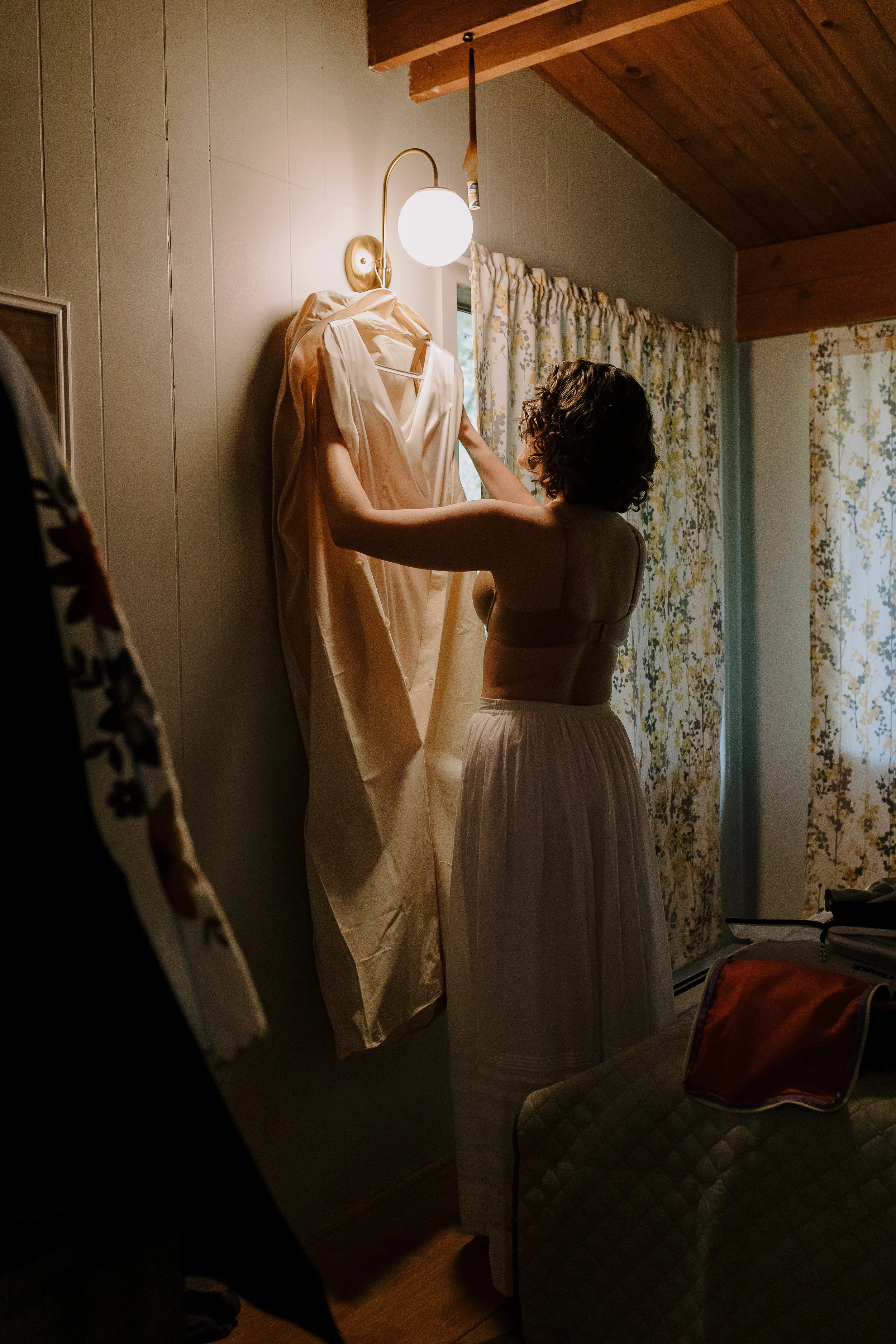
The bride was in her own cabin, waiting. Her older sister was rushing across the camp to fix her curls — the kind her family has called her "boings" since she was a little girl, the prettiest curls you've ever seen. In the next cabin over, her other sister was bent over a piece of paper, copying out her speech in careful longhand. She would be the one to marry them.
All three of them were wearing gowns they had made themselves.
When they finally came together — the bride with her boings fixed, the officiant sister with her speech folded in her hand, the third sister who had held the morning together — I thought of Little Women. That particular quality of intimacy between sisters who have been each other's whole world. I have three older sisters of my own. I recognized it immediately. I envied it a little, if I'm honest. That level of closeness is rare.
When it became clear we were running 30 to 45 minutes behind, I sent one message to the couple:
Don't rush. The wedding won't happen without you. Enjoy the moment.
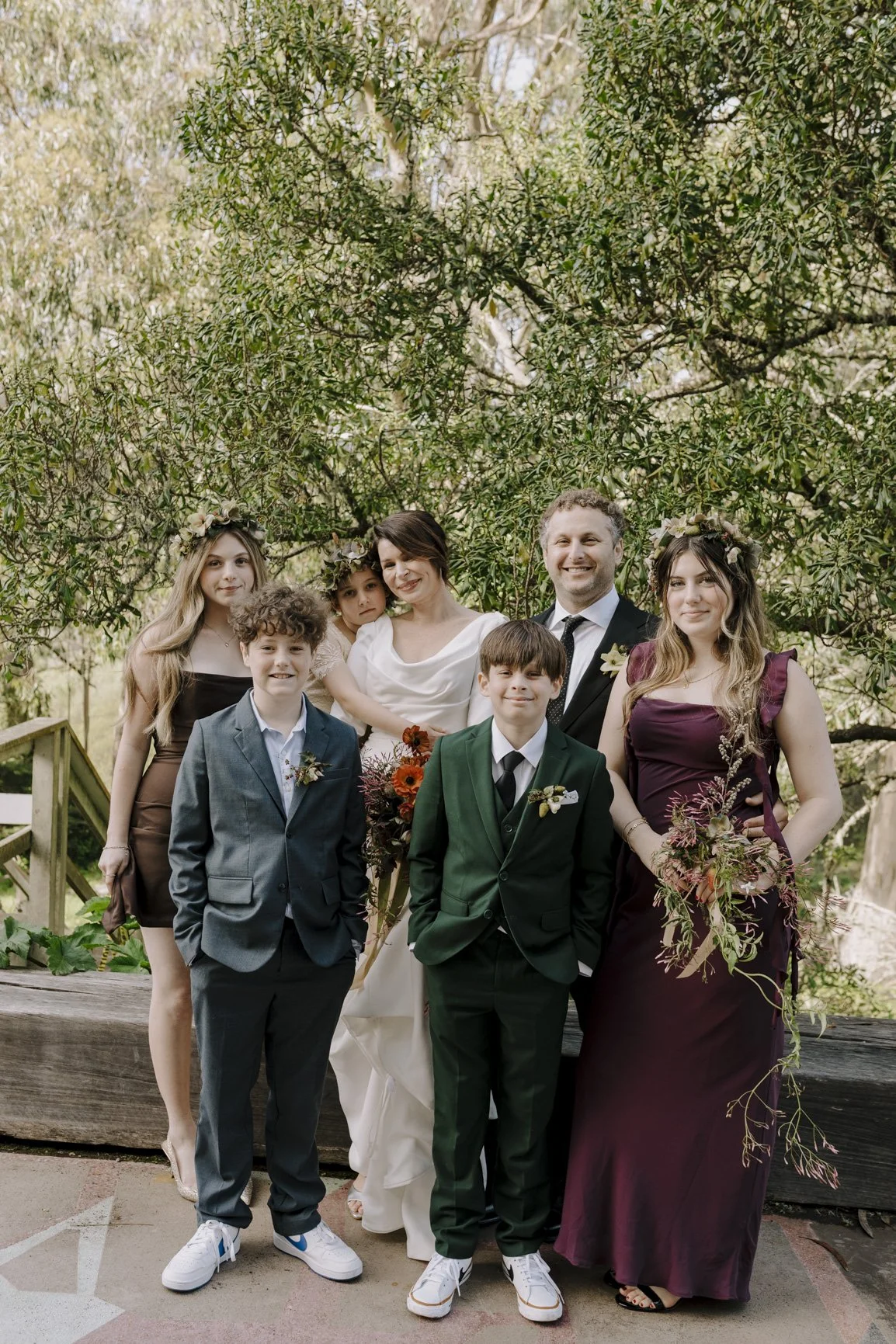
We shifted the family portraits to after the ceremony, gained back the time we needed, and nobody — not a single guest, not the couple, not the sisters in their handmade gowns — felt the difference. What they felt instead was the particular calm of a day that was allowed to be exactly what it was.
That is what a good timeline actually does. Not keep everyone on schedule. Give everyone permission to be present.
Why most wedding day timelines fail
The most common timeline mistake I see couples make is trying to fit too much in.
It comes from a good place — they want everything, they've planned for months, they don't want to miss a single moment. So the timeline gets packed. Every transition is tight. Every window is optimized. And then the day arrives and something runs five minutes long and suddenly everything is behind and someone is rushing and the bride is being pulled away from her grandmother mid-conversation because portraits start in three minutes.
The irony is that a packed timeline doesn't give you more of your wedding day. It gives you less. Because you spend it watching the clock instead of living inside the moment.
The second mistake is treating the timeline as a contract rather than a guide. Timelines are frameworks. Wedding days are human. People will linger. Toasts will run long. The flower girl will need five minutes and a snack. The father of the bride will want one more photograph with his daughter and you will be grateful, later, that you let him have it.
Build in breathing room. Plan for things to run a little slow. The guests will wait. They are there because they love you. They are not watching the clock either.
How to think about your portrait session
The portrait session is where I see the most timeline anxiety — and where I most often push back on conventional wisdom.
Most photographers will tell you that more time equals better portraits. I want to tell you something different: the quality of the time matters more than the quantity. A relaxed 30 minutes produces better, truer, more beautiful images than a stressed 60 minutes. Every time.
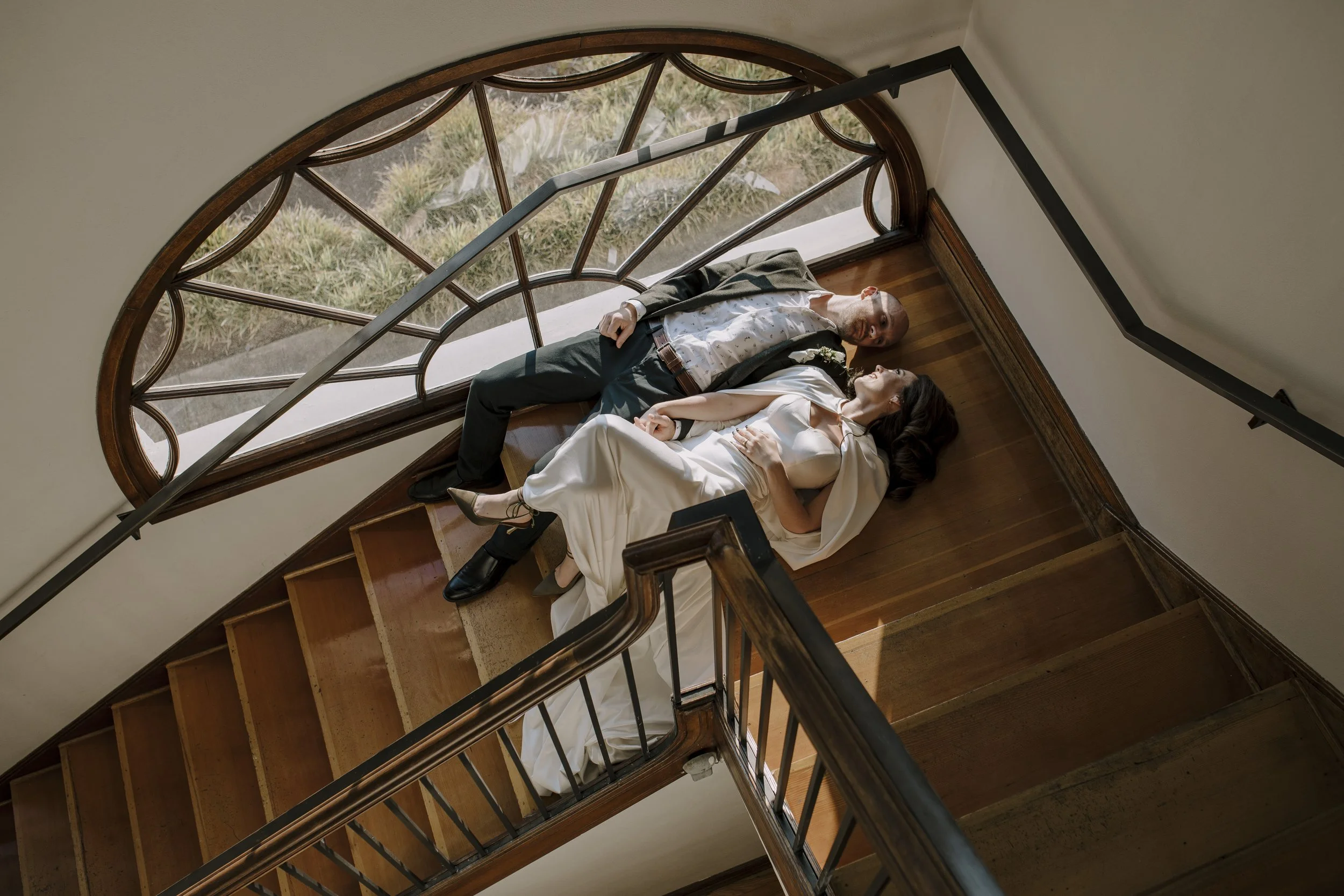
Here is why. The portrait session is not a photoshoot. It is the one moment in your wedding day that belongs entirely to the two of you — away from your guests, away from the logistics, away from the hundred small decisions that have been accumulating since you woke up that morning. It is a breath. A stolen pocket of time where you get to just be together.
When that time feels rushed — when you're watching the clock, when you know your guests are waiting, when the coordinator is hovering at the edge of the frame — the images reflect it. Not dramatically. Just a subtle tightening. A performance of presence rather than presence itself.
When that time feels like rest, something different happens. Couples relax into each other. They forget, after a few minutes, that I'm there. They say something real or laugh at something private and I'm already watching and the image that comes from that moment is the one they'll have above their fireplace in twenty years.
I have had more couples tell me the portrait session was their favorite part of the day than I can count. Not because I did anything extraordinary. Because I gave them permission to stop managing the day for twenty minutes and just be in it together.
That is what the portrait session is actually for.
On golden hour — and why it's worth planning around
If your venue and timeline allow for it, I will always advocate for golden hour portraits.
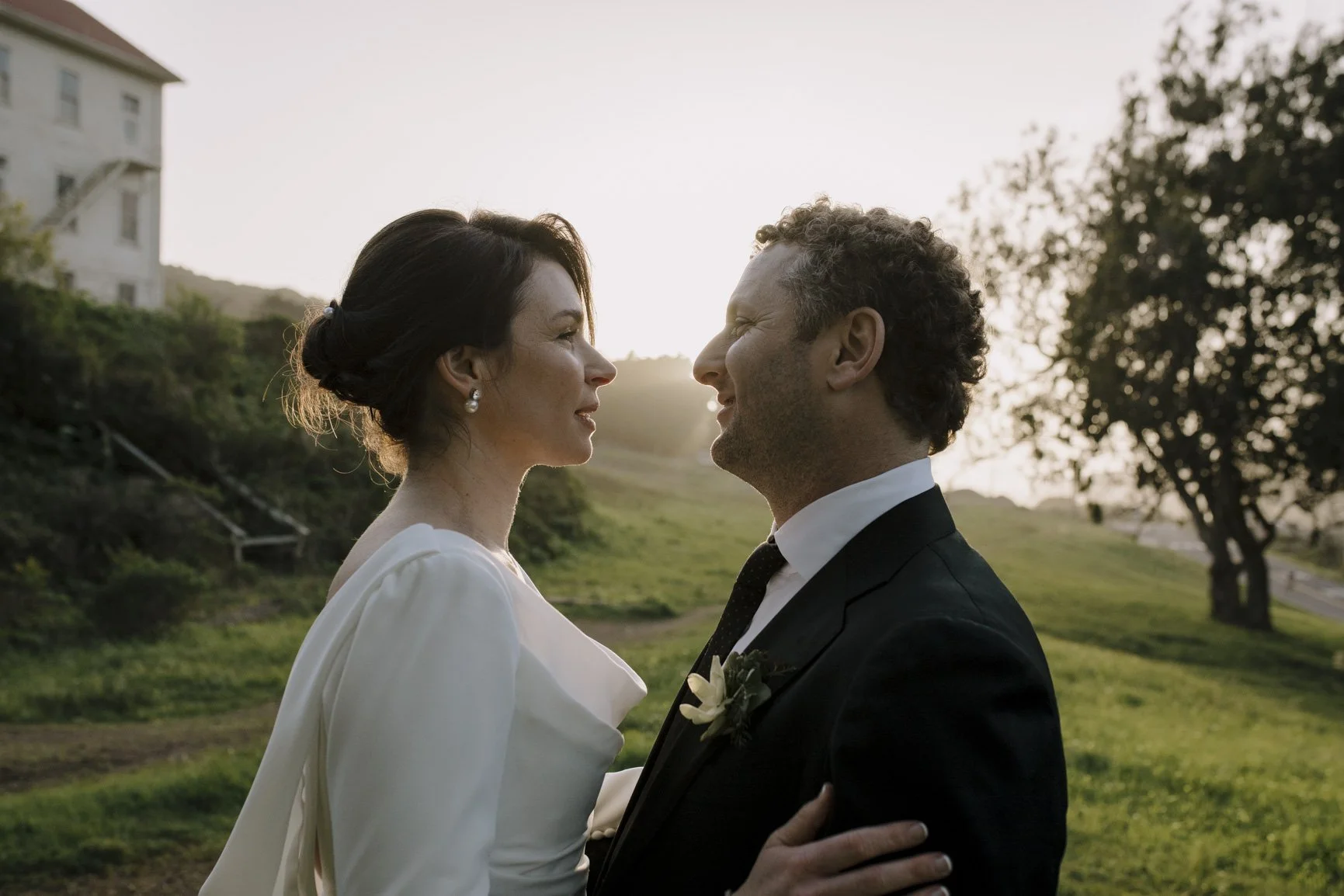
Golden hour — the 30 to 60 minutes before sunset — produces light that is warm, directional, and extraordinarily flattering. It falls across skin the way no other light does. It turns an ordinary field into something cinematic. It is, in my experience, the single easiest way to make already-beautiful portraits genuinely extraordinary.
But I want to be honest: golden hour is a preference, not a requirement. I have photographed in every condition the Pacific Northwest offers — overcast skies, midday sun, dim indoor venues, candlelit receptions — and beautiful portraits are possible in all of them. Light is always there. The job is finding it.
If golden hour portraits matter to you, tell your coordinator early and build the timeline backward from sunset. It is almost always possible to arrange. And it is almost always worth it.
A different kind of portrait session — for multi-day weddings
For couples who book me for multiple days, I prefer to do portraits the day before the wedding entirely.
No timeline pressure. No guests waiting. No coordinator with a walkie-talkie. Just the two of you, the light, and as much time as we need to find something true. You arrive as yourselves — not in wedding clothes, not performing for anyone — and we spend a few hours in the places that matter to you, in the light that happens to be there, making images that feel nothing like wedding portraits and everything like who you actually are together.
These are often the images couples love most. Because they were made without any of the weight of the day attached to them.
A practical guide to building your timeline
With all of that philosophy said — here is the practical framework I recommend to every couple I work with.
Getting ready: Give yourself more time than you think you need. This is where the day sets its emotional tone. If getting ready feels rushed, everything that follows carries that energy. Build in at least 30 minutes of buffer. This is also where some of the most beautiful images of the day are made — the quiet moments between you and the people who have loved you longest.
First look: If you choose to do one, 15 to 20 minutes is enough. The moment itself takes seconds. What follows — the two of you, alone, before the ceremony — is worth lingering in.
Family formals: Give me your list of groupings in advance and I will move through them efficiently. Most families are done in 20 minutes. Build in 30 to be safe. Do these immediately after the ceremony while everyone is still gathered.
Portrait session: 30 minutes of golden hour, if possible. If not, 30 minutes of whatever light is available. Keep it protected — this time is for you, not for anyone else.
Buffer time: Build at least 30 minutes of unscheduled time into your day. Not for portraits. Not for formals. Just for whatever the day needs. You will use it. You will be glad it was there.
Reception: Let it breathe. The best moments of a reception are almost never the scheduled ones.
The most important thing I can tell you about your timeline
Plan it carefully. Then hold it loosely.
The wedding day you've been imagining for months will arrive and immediately become its own thing — warmer, stranger, more human than any document could have predicted. The sister will rush across the camp to fix the boings. The family portraits will move to after the ceremony. The toast will run long because the best man has more to say than he thought.
Let it.
The guests will wait. The light will find you. The images that matter most will come from the moments you didn't plan.
Your only job on your wedding day is to be inside it. A good timeline — and a good photographer — makes that possible.
Kelli is a documentary wedding photographer based in Portland, Oregon, photographing weddings across the Pacific Northwest and beyond. If you are looking for someone to hold your day with care — I would love to hear from you.